
The Hardware Moat: How AI Infrastructure Shifts Impact Your Business
Explore how advancements in GPU architecture and custom silicon are shaping the future of AI accessibility and service costs for businesses.
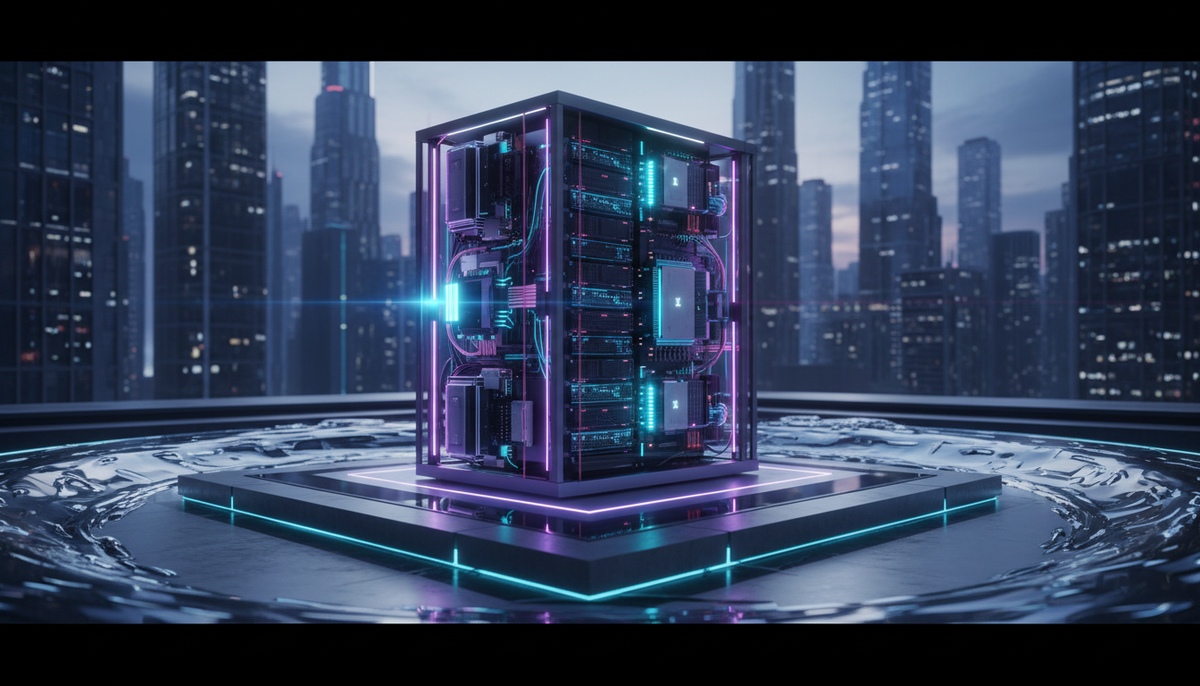
The Hardware Moat: How AI Infrastructure Shifts Impact Your Business
The rapid evolution of AI is often discussed in terms of software, but the true engine of progress lies in the hardware. As the industry moves toward more sophisticated architectures—such as the NVIDIA Blackwell series and the rise of custom ASICs—the implications for businesses are significant. Understanding these shifts helps you anticipate how AI services will evolve in terms of cost, speed, and capability.
Why AI Infrastructure Matters for Your Strategy
AI hardware trends act as the foundation for the tools you use daily. When hardware becomes more efficient, the computational cost of running complex models drops. This "hardware moat"—the massive investment required to build and maintain cutting-edge data centers—is currently being navigated by major cloud providers.
For the average business, this means:
- Increased Accessibility: As infrastructure matures, high-level AI tasks like real-time video processing and complex data analysis become cheaper and more reliable.
- Performance Gains: Newer architectures allow for faster inference times, meaning your AI-powered workflows can operate with lower latency.
- Strategic Planning: By monitoring the shift toward custom silicon, businesses can better predict when new, more powerful AI features will become standard in their existing software suites.
The Future of AI Infrastructure: What to Expect
As we look toward 2026, the industry is focusing on two primary hardware pillars:
- High-Performance GPUs: These remain the workhorses for training large models, driving the quality of generative AI outputs.
- Custom ASICs: Companies are increasingly designing chips tailored for specific AI tasks, which improves energy efficiency and reduces long-term operational costs.
Practical Ways to Leverage AI Today
You don't need to be a hardware engineer to benefit from these advancements. Focus on integrating AI into your existing workflows to maximize productivity:
- Automate Content Creation: Use AI writing assistants to draft emails and social media updates, saving manual hours.
- Enhance Visual Branding: Leverage AI image generators to create professional assets without needing a dedicated design team.
- Streamline Multimedia: Utilize AI-powered tools to maintain brand consistency across text, image, and video projects.
How to Get Started: A Quick Checklist
- Identify your bottleneck: Determine if your primary challenge is writing, design, or data analysis.
- Evaluate your stack: Look for tools that leverage the latest cloud-based AI infrastructure to ensure you are getting the best performance for your subscription cost.
- Test and iterate: Use simple prompts to see how AI can handle your specific business tasks and refine your approach as the technology improves.
Strategy Prompt
"Act as a business consultant. Help me create a 30-day content calendar for my [Insert Business Type] that focuses on [Insert Goal]."
Conclusion
The landscape of AI is changing rapidly, driven by massive investments in hardware. While the technical complexity of these chips is vast, the result for your business is clear: more powerful, efficient, and accessible tools that allow you to focus on growth rather than infrastructure.
Try Gab AI
Try Gab AI for uncensored chat, real-time web search, and high-quality content generation.