
The AI Build-Out May Be the Biggest Economic Bet in U.S. History — What It Means for Jobs, Housing, and Your Wallet
AI infrastructure spending is reaching a scale that some analysts argue rivals the great infrastructure projects of American history. Here's what that means for everyday Americans — from housing costs to new career paths.
The AI Build-Out May Be the Biggest Economic Bet in U.S. History — What It Means for Jobs, Housing, and Your Wallet
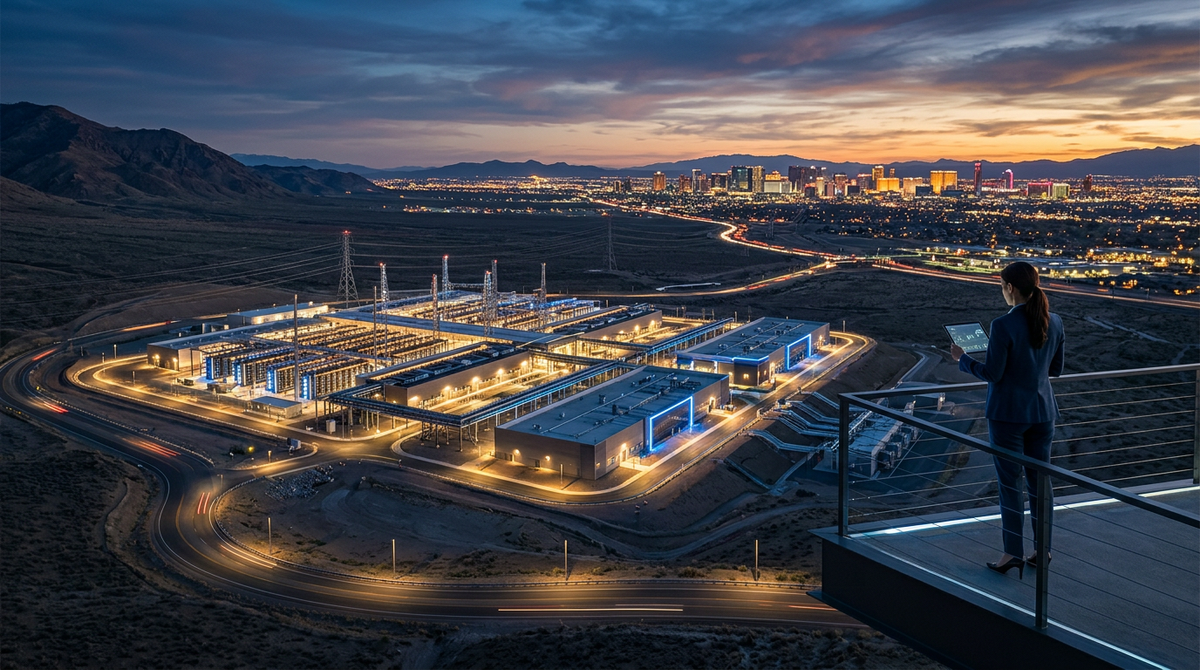
Sometime in the last twelve months, without most people noticing, the amount of money pouring into AI infrastructure accelerated past anything the technology industry has seen before. The scale of capital deployment — across data centers, GPU clusters, power infrastructure, and cooling systems — is prompting serious comparisons to the great infrastructure build-outs of American history: canals, railroads, and the electrical grid.
The Wall Street Journal recently published an analysis examining AI infrastructure spending in the context of America's previous great capital deployments. While the exact methodology and inflation-adjusted comparisons deserve scrutiny, the directional conclusion is hard to argue with: the current AI data center build-out is consuming capital at a pace and scale that is historically unusual, potentially rivaling or exceeding previous technology build-outs when measured over a comparable timeframe.
Meanwhile, the headlines from a single recent week tell the story of acceleration:
- SoftBank reportedly issued $11.1 billion in bonds to finance its deepening financial relationship with OpenAI, according to Reuters reporting.
- Microsoft announced plans for more than $10 billion in data center and AI infrastructure investment in the Gulf region, with a stated focus on supply chain resilience, per Reuters.
- Nscale, a UK-based AI infrastructure company, is reportedly seeking a $35 billion IPO valuation, with Nvidia reportedly helping finance the effort, according to Fortune.
This isn't a tech story anymore. It's an economic story. And it touches your life whether you work in technology or not.
What Actually Changed This Week
The Wall Street Journal's analysis aggregated capital expenditure data across the major AI players and compared it against historical figures for America's previous great infrastructure projects. The framing was striking: the current AI data center build-out may have already reached a scale comparable to — and by some measures exceeding — the capital deployed to build the canal system, the transcontinental railroad network, and the original electrical grid.
That comparison deserves important context. The WSJ's specific methodology, including how inflation adjustments were calculated and which spending categories were included, matters enormously for evaluating the claim. Railroads took decades. The electrical grid was built over generations. AI data centers? The bulk of this spending has happened in roughly three years. Compressing that timeline changes the comparison significantly — the rate of spending may be unprecedented even if the cumulative totals are debatable.
Here's what's driving the acceleration:
- SoftBank's reported $11.1 billion bond issuance is notable because it's debt, not equity investment or venture capital. Debt financing signals SoftBank's conviction that returns will be large enough and soon enough to service bond payments. The scale of the issuance — for a single AI-related partnership — underscores how much capital is flowing into this space.
- Microsoft's reported $10 billion-plus Gulf investment reflects a strategy of geographic diversification of compute power. The stated emphasis on "resilience" suggests Microsoft is thinking about scenarios where political events or natural disasters could disrupt AI services concentrated in a single region.
- Nscale's reported $35 billion IPO valuation target is remarkable for a company that most Americans have never heard of. Nscale builds GPU clusters for AI workloads. For rough perspective, $35 billion is in the range of several well-known S&P 500 companies, though exact comparisons shift with daily market movements.
These aren't speculative bets by garage startups. These are enormous capital commitments by some of the world's largest financial institutions and technology companies. The money is being poured into concrete, copper, cooling systems, and chips — physical infrastructure that will exist for decades.
The question isn't whether the build-out is happening. It's whether the rest of the economy is ready for the ripple effects.
The Job Market Is Shifting Underneath People's Feet
Every major infrastructure project in American history created new job categories that didn't exist before it started. Railroads created telegraph operators, station agents, and an entirely new class of civil engineers. The electrical grid created linemen, meter readers, and appliance salespeople.
The AI build-out is doing the same thing, but faster.
The most obvious new jobs are in data center construction and operations. If you live anywhere near northern Virginia, central Texas, central Ohio, or the Phoenix metro area, you've probably noticed the construction. Data centers require electricians, HVAC technicians, concrete workers, security personnel, and facilities managers. These aren't coding jobs. They're skilled trades, and industry job postings suggest they're paying well above regional averages for comparable roles because demand is outstripping supply.
But the less obvious job growth is happening in what you might call "AI-adjacent" roles — positions that exist because AI tools are now part of how businesses operate. Content strategists who understand how to direct AI writing tools. Marketing managers who can use AI to generate images, video, and copy without needing a design team. Operations people who can set up AI-assisted workflows for customer service, scheduling, or inventory management.
These roles don't require a computer science degree. They require curiosity, adaptability, and a willingness to learn tools that are, frankly, getting easier to use every quarter.
If you're someone who's been watching the AI conversation from the sidelines, wondering whether it's relevant to your career — this is the part where it becomes relevant. The companies building data centers need thousands of workers right now. The companies using what those data centers produce need people who can bridge the gap between "AI can do this" and "here's how we actually use it on Tuesday morning."
Careers Worth Watching
A few specific paths that are growing because of AI infrastructure spending:
- Data center technician — Requires technical training but not a four-year degree. Industry job listings in major metro areas suggest starting salaries in the range of $55,000–$80,000 or higher, with experienced techs earning six figures, though compensation varies significantly by region and employer.
- AI operations specialist — A hybrid role combining project management with AI tool proficiency. Companies need people who can evaluate which AI tools to adopt and then actually implement them.
- Energy infrastructure roles — Data centers consume enormous amounts of electricity. Utilities, solar installers, and grid operators are all hiring to meet demand.
- Prompt engineering and AI content roles — Still evolving, but businesses are increasingly hiring people whose primary skill is knowing how to get useful output from AI tools.
- Cooling system engineers — This sounds niche, but it's becoming a bottleneck. AI chips generate tremendous heat, and the engineers who design and maintain cooling systems for GPU clusters are in short supply.
None of these existed as distinct career categories five years ago.
The Housing Problem Nobody Wants to Talk About
Here's where the story gets uncomfortable.
Data centers need to be located near three things: reliable power, fiber optic networks, and water (for cooling). The places that have all three tend to be the same places where people already live. Northern Virginia. The suburbs of Dallas. Greater Phoenix. Parts of Oregon and Iowa.
When a company announces a $2 billion data center campus in a mid-sized metro area, several things happen in sequence. Construction workers flood in. Then operations staff. Then support businesses — restaurants, housing, retail. Property values rise. Rents rise. Local governments celebrate the tax revenue.
But the people who already lived there? They're now competing for housing with an influx of well-paid workers, and the data center itself is sitting on land that might otherwise have been developed for residential use.
This pattern has already played out in Loudoun County, Virginia, which hosts the densest concentration of data centers on Earth. Home prices in Loudoun County have risen substantially since 2020, outpacing national averages according to local real estate data and media reports, though the exact percentage depends on the time period and data source used. Local residents have organized opposition to new data center construction, citing noise from cooling systems, strain on the electrical grid, and — most pointedly — the sense that their community is being reshaped to serve companies that employ relatively few people per acre compared to other commercial development.
The math is blunt: a data center campus that covers 50 acres might employ 50–100 people during operations. A mixed-use development on the same land might support thousands of residents and hundreds of small businesses. When land goes to data centers, it doesn't go to housing.
This dynamic is worth watching carefully if you live in or near one of the emerging data center corridors. It's also worth watching if you're a small business owner — because the construction phase brings a temporary boom in local spending, but the operational phase is much quieter.
What This Means for Inflation
The AI build-out is consuming physical resources at a rate that's starting to show up in commodity markets.
Data centers need copper — lots of it — for wiring and electrical systems. They need concrete for foundations. They need steel for structures. They need specialized semiconductors that require rare earth minerals. And they need electricity, which in many regions means natural gas.
When demand for these materials spikes, prices rise. And those price increases don't stay contained to the tech sector. The same copper that goes into a data center also goes into new home construction. The same concrete goes into roads and bridges. The same natural gas heats homes.
Economists are divided on how much AI infrastructure spending is contributing to broader inflation. Some argue the effect is marginal compared to the overall economy. Others point to specific regional impacts — electricity prices in northern Virginia have come under pressure partly because data centers now consume a significant share of the regional grid's capacity, according to local utility reporting and news coverage.
What's not debatable is the direction. AI infrastructure spending is increasing demand for physical resources at a time when supply chains are still adjusting from pandemic-era disruptions. Whether that translates into noticeable price increases for everyday goods depends partly on how quickly the build-out proceeds and partly on whether energy production can keep pace.
For anyone keeping an eye on AI news and industry developments, the inflation angle is one of the most underreported aspects of the story. The conversation tends to focus on stock prices and product launches, not on what happens to electricity bills in data center corridors.
The Bubble-or-Boom Debate
Is this the next dot-com bubble? Or is it more like the early days of electrification — messy, expensive, and ultimately transformative?
Reasonable people disagree, and the honest answer is that nobody knows yet. But there are a few things worth considering.
The case for boom: AI is already generating real revenue. Unlike many dot-com companies that had users but no business model, the major AI providers are charging for their services and seeing rapid adoption. Microsoft's AI-related revenue is growing. Companies are paying for AI tools and reporting measurable productivity gains. The infrastructure being built has a clear customer base.
The case for bubble: The valuations are getting stretched. Nscale reportedly seeking a $35 billion valuation before going public is the kind of number that makes veteran investors nervous. SoftBank reportedly financing AI bets with $11.1 billion in debt echoes the leveraged bets that preceded previous market corrections. And the assumption baked into these investments — that AI demand will continue growing exponentially for years — requires everything to go right.
The case for "it's complicated": Even if some companies fail and some investments don't pay off, the physical infrastructure will remain. When the dot-com bubble burst, the fiber optic cables stayed in the ground. They eventually became the backbone of the modern internet. Similarly, even if the current AI hype cycle corrects, the data centers will still be there, and they'll still be useful.
For individual investors, the practical takeaway is boring but important: diversification still matters. AI infrastructure stocks have performed well, but concentration risk is real. If you're investing in AI-related companies, make sure you understand what you own and why.
Practical Takeaways — What You Can Actually Do With This Information
All of this is interesting, but what should you actually do about it? Here are some concrete steps depending on your situation.
If You're Considering a Career Move
- Research data center job boards in your region. Companies like Compass Datacenters, QTS, and major cloud providers are hiring across skill levels. Many positions require certifications rather than degrees.
- Build AI tool proficiency now. You don't need to become a programmer. You need to become comfortable using AI tools for real work — writing, analysis, image creation, brainstorming. An all-in-one AI tool that handles text, images, video, and music lets you build broad fluency without juggling a dozen different platforms.
- Look at adjacent industries. Electrical utilities, renewable energy companies, and commercial real estate firms focused on data center properties are all hiring.
If You're a Small Business Owner Near a Data Center Corridor
- Understand the construction timeline. Data center construction typically takes 18–36 months. The economic boost from construction workers is temporary. Plan accordingly.
- Consider B2B services. Data center operators need local vendors for everything from catering to landscaping to security staffing.
- Watch your lease terms. If commercial rents in your area are rising because of data center demand, lock in favorable lease terms now rather than waiting.
If You're an Investor Watching This Space
- Distinguish between infrastructure plays and application plays. Companies building data centers and selling chips have more predictable revenue than companies building AI applications that may or may not find product-market fit.
- Watch energy stocks. The AI build-out's most reliable downstream effect is increased electricity demand. Utilities and energy producers in data center regions are a less volatile way to gain exposure.
- Be skeptical of IPO valuations. A reported $35 billion valuation target for a company most people haven't heard of should prompt questions, not excitement.
Copy-and-Paste Prompts for Exploring This Topic Further
If you want to dig deeper into how AI infrastructure spending affects your specific situation, here are some prompts you can use with an AI writing assistant:
For career research:
"List the top 10 non-technical jobs created by AI data center construction, including typical salary ranges, required certifications, and which U.S. regions have the most openings."
For small business planning:
"I own a [type of business] in [city/region]. A major data center is being built 15 miles away. What opportunities and risks should I prepare for over the next 2 years? Be specific."
For investment analysis:
"Compare the investment thesis for AI infrastructure companies versus AI application companies. What are the key risks for each category, and what historical parallels from previous technology build-outs are most relevant?"
For understanding local impact:
"Summarize how data center construction has affected housing prices, electricity costs, and local employment in Loudoun County, Virginia over the past 5 years. What lessons apply to other regions experiencing similar growth?"
What Most People Get Wrong About the AI Build-Out
Mistake #1: Assuming it's just a tech industry story. The money flowing into AI infrastructure is reshaping energy markets, housing markets, labor markets, and commodity prices. Ignoring it because you don't work in tech is like ignoring the interstate highway system because you don't drive a truck.
Mistake #2: Thinking the jobs are all in coding. The majority of jobs created by data center construction are in trades, operations, and support roles. The biggest skills gap right now isn't in software engineering — it's in electrical work, HVAC, and facilities management.
Mistake #3: Treating all AI investments as equal. There's a meaningful difference between a company that owns physical infrastructure (land, buildings, power contracts) and a company that's building an AI chatbot. The infrastructure company has tangible assets even if the AI hype fades. The chatbot company might not.
Mistake #4: Ignoring the energy dimension. Every conversation about AI should include a conversation about electricity. Data centers are energy-intensive, and the regions that can't supply enough power will lose out on economic growth. If you're evaluating where to live or invest, energy infrastructure is a leading indicator.
Mistake #5: Waiting for certainty before acting. By the time it's obvious whether the AI build-out is a bubble or a boom, the career opportunities and investment windows will have narrowed. The people who benefit most from infrastructure booms are the ones who position themselves early — not recklessly, but thoughtfully.
What to Watch Next
Several milestones in the coming months will clarify where this is heading:
- Nscale's IPO pricing and reception will signal whether public markets are willing to support AI infrastructure valuations at current levels. A successful IPO at or above the reported $35 billion target would accelerate similar offerings. A stumble would cool things down.
- SoftBank's bond performance will indicate whether debt markets believe the AI revenue thesis. If those bonds trade at a discount, it suggests institutional skepticism about the timeline for AI returns.
- Regional electricity pricing data from data center corridors will show whether energy costs are rising fast enough to create political backlash or slow construction permitting.
- Q3 and Q4 2025 earnings reports from Microsoft, Google's parent Alphabet, and Amazon will reveal whether AI-related revenue is growing fast enough to justify the capital expenditure. Pay particular attention to capex guidance and management commentary on AI return on investment.
For anyone trying to stay informed without drowning in hype, focusing on these concrete data points is more useful than following the daily churn of AI product announcements.
We take your data seriously — you can review our privacy policy to understand how we handle your information.
The Bottom Line
The AI infrastructure build-out is real, it's enormous, and it's already affecting the American economy in ways that go far beyond Silicon Valley. Housing costs in data center corridors are rising. New job categories are emerging. Commodity prices are being influenced by demand for construction materials and electricity.
None of this means you need to panic, and none of it means you need to rush into AI stocks. What it means is that understanding AI infrastructure spending — even at a basic level — is becoming as important as understanding interest rates or energy prices. It's a force shaping the economy, and the people who pay attention to it will make better decisions about their careers, their businesses, and their investments.
The most practical step you can take today is simple: start using AI tools for your actual work. Not as a novelty, but as a productivity multiplier. Get comfortable with what AI can and can't do. Build the kind of practical fluency that makes you valuable in an economy that's being reshaped by this technology.
Start creating text, images, videos, music, and more in one place at https://gab.ai.
Try Gab AI
Try Gab AI for uncensored chat, real-time web search, and high-quality content generation.